Parimatch Cricket Explained: Everything Fans Should Know About Modern Cricket Balls
📅 2026-08-29 • ✍️ Pari Match
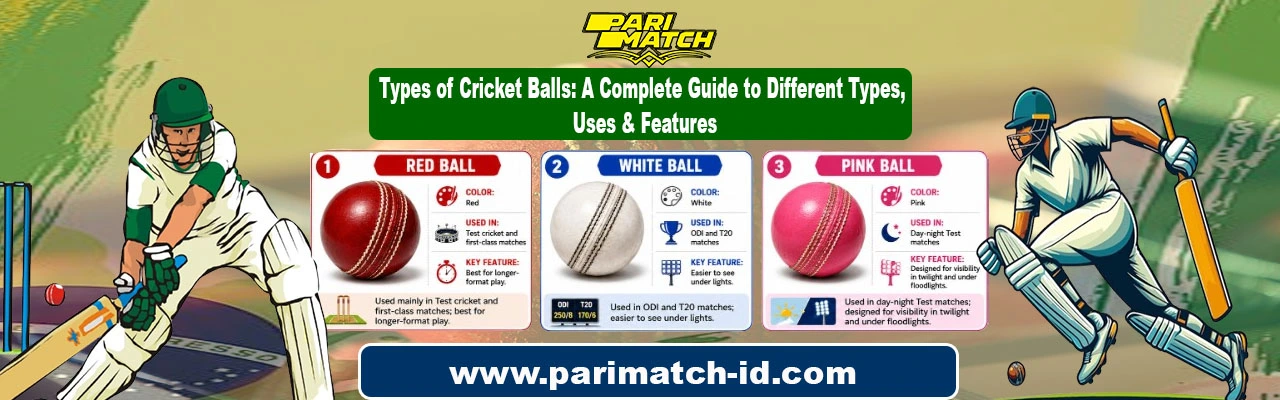
Though at first appearance it may appear effortlessly uncomplicated, this is one of the most vital pieces of kit in cricket. The colour, make, surface, hardness and condition of it can have an affect on how a match progresses. However, to watch the game of cricket will be more engaging for fans who know the ball if they are competing in the domestic or the T20 league or just watching the international match on PariMatch. Cricket comes in various forms and the type of ball used varies from type of cricket. The differences are not just external. The Test cricket ball is red in colour, which is different from the white ball used in limited-overs cricket and the pink ball is newly designed for day-night Test cricket.
The cricket ball can make all the difference in the game between the bat and ball, from how it moves to its visibility to its durability.
What's a cricket ball made of?
A traditional cricket ball is not a plain solid ball, but rather, it is composed of multiple layers.The ball's hardness and weight comes from the cork core in the centre. This is surrounded by spirals of string or yarn. It is then encased in leather on the outside. An easily identifiable trait is the stitching around the ball. Seam is also significant because bowlers can use the seam to manipulate the ball's movement in their favour. A fast bowler can try to finish the ball with the seam on the ground, or spinners can attempt to use the effect of the seam and the ball's surface to help move the ball.
The construction must also satisfy the demands of cricket which is competitive. A ball shall be sufficiently hard for it to retain its shape; at the same time, it must be: suitable for the objectives of a game of football; hard enough to be useful on many occasions.
Colour choice is related to visibility
The ball is easier to see on a traditional daytime background when it is red, and it is easier to see on a darker background with floodlights when it is white.The ball was originally created to give better illumination of the pitch during the DAY/night Test cricket conditions.
This must be a lovely book.That's an exquisite book!
The Red Cricket Ball
It is very closely related to Test cricket in which one team is able to bat for a considerable length of time and the ball in play for many overs. This is one of its most distinguishing qualities, that it can ensure beneficial mobility and hardness for a long time.
Fast bowlers may try to build up typical swing, seam movement and bounce, especially with the help of a fairly new ball. The surface slowly evolves during the course of the game. This poses another problem for young bowlers and young batters.
Under the right circumstances, the new red ball can be of enormous help to the fast bowlers. In older balls, reverse swing plays a crucial role in some situations later in the game.Under conditions of pitch and ball variation, spin bowlers may also gain a lot of ground. It can effectively be asked then that the Test could house a number of different contests using the same ball during a match for fans.
The White Cricket Ball
The association of the white cricket ball is very close with limited overs cricket. They are played in formats like ODIs and T20s, as they are easier to observe in artificial light. In a limited-overs match, often played in the evening, there's a lot that has to be taken into account, particularly what the players can see.
Another difference: the white ball plays a different role during the course of an innings. For example, in T20 cricket, the 120 legal balls in a ‘normal’ innings. The ball will thus need to be seen and usable throughout the game. Professional teams may also be providing multiple balls according to the rules of the competition in some types of limited overs cricket.The white ball is significant for the swing bowlers at the start of an innings. Bowlers may attempt to get the ball through the air; batters to exploit the fielding rules and opportunities.
Why is it important to have a seam?
One of the most important components of a cricket ball is the 'seam'. If the seam is fairly straight it may play the pitch and cause the run to move away from or toward the batter. When the pitch is conducive towards assisting the fast bowler, the movement of the seam may be quite evident. The seam can be used also in different ways for spinners. When a ball bounces on a surface, it can have an effect on their delivery that makes it more difficult for the batter to see. The seam allows bowlers a different weapon to use apart from just producing spin or speed.
What Is Swing Bowling?
Swing happens when the ball deviates through the air after the bowler has released it.The fast bowlers can make use of the condition of the ball, seam placement and atmospheric conditions to create movement.
Two general types of conventional swings exist: Inswing swings towards the batsman. Outswing swings away from the batsman. As for the batsman, any deviation, no matter how slight, can make a huge difference. The ball which at first seemed to go somewhere may suddenly deviate and thus give the batsman a hard time picking his shot.
It is especially exciting to observe when a new ball is played since the condition of the ball makes it susceptible to some particular types of bowling.
What Happens When the Ball is Old?
The cricket ball does not stay the same during an entire innings game. As it continuously interacts with the ground, bat, and fielders, the ball changes its form. Scratches or scuff marks may appear on the ball’s leather surface, and the ball seam can become less visible. Bowlers and fielders can also try to keep one side of the ball smooth,while allowing another side to get rough.Ball condition may affect the behavior of the ball.In longer forms of games, it becomes possible to use various bowling tactics during the course of the game because a ball that previously acted one way will behave differently.
This slow change is one of the most interesting things about Test cricket.
What Makes T20 Games Unique?
The players in a T20 game are aware that they only have so many deliveries. As such, batters tend to play aggressively in order to score, whereas bowlers use variations to prevent boundaries being scored. In addition, the ball can be played back at very fast speeds and with long distances. Therefore, the yorkers, slower balls, cutters, bouncers, and variations in spin can affect the timing of the batter. The state of the ball can hence affect tactics in even a short innings.
By comprehending these aspects, fans following T20 tournaments on Pari Match will be able to appreciate them even more since there is significance in each delivery.
How Weather Can Affect the Ball
A cricket ball is not separate from what is around it. Things like humidity, heat, wind, and the pitch itself can change the match condition. On cloudy days, swing can sometimes come easier. On a dry surface, spin may get more grip. These changes do not show up the same way every time. What happens also depends on how the pitch is made and how the ball looks after a number of overs. Bowling style matters too, not just the type of ball. That is why two games with the same ball can still feel different.
The Ball and the Pitch Work Together
It is also vital to remember that it is equally wrong to treat the cricket ball as something separate from the pitch. The combination of a brand-new ball and a green pitch will lead to an entirely different contest than when you have an old ball and a turning pitch. The fast bowler may be seeking bounce and seam movement from one kind of pitch and, on the other, the spinners may get more into play. This interaction is one of the things that makes cricket so variable throughout several matches.
Why Ball Type Matters to Cricket Fans
Knowing which ball is being used can provide useful context when watching a match.
The Red ball Test is an entirely distinct game in terms of tactics as compared to a T20 match with a white ball. Pink ball Test is a further point as it is because the players have to adapt to changing light conditions.
The ball could impact how much swing the bowler is able to generate and how the batter executes his shots in the game. For people who follow cricket on Parimatch, all these facts would help them comprehend the statistics and match happenings better. It is no longer just about a player taking a wicket, but also taking into consideration whether the ball was new, seam condition and other factors.
Parimatch and the Cricket Viewing Experience
For users exploring Pari Match India, cricket coverage can provide a way to follow different competitions and matches from around the sport. Depending on the event and current platform offering, fans may find match schedules, scores, statistics, live information and other features alongside available sports markets.
Pari Match ID is used in relation to the account or service in question, although players need to consider the present requirements relevant for their region with regard to age limitations, restrictions, etc. Of course, watching a cricket game is not complete without knowing the game itself, the equipment, the playing conditions, etc., which makes it more interesting whether the game is a Test, an ODI, or a T20 game.
Conclusion
But there’s much more to the cricket ball than just a simple projectile flying from the bowler to the batter.
The red ball symbolizes the classic long form game, in which the state of the ball can change throughout time. The white ball is associated with limited overs cricket, in which visibility and speed play a vital role. And the pink ball adds yet another element to the Test cricket game, letting games go well into the night.
The seam, surface, hardness and condition of the ball can affect how the game progresses.
For cricket lovers at Pari Match, being aware of the differences will provide valuable information for each match. A swing from the ball in favor of the batter, movement from the seam, or changes in the older ball – these are not just coincidences.